
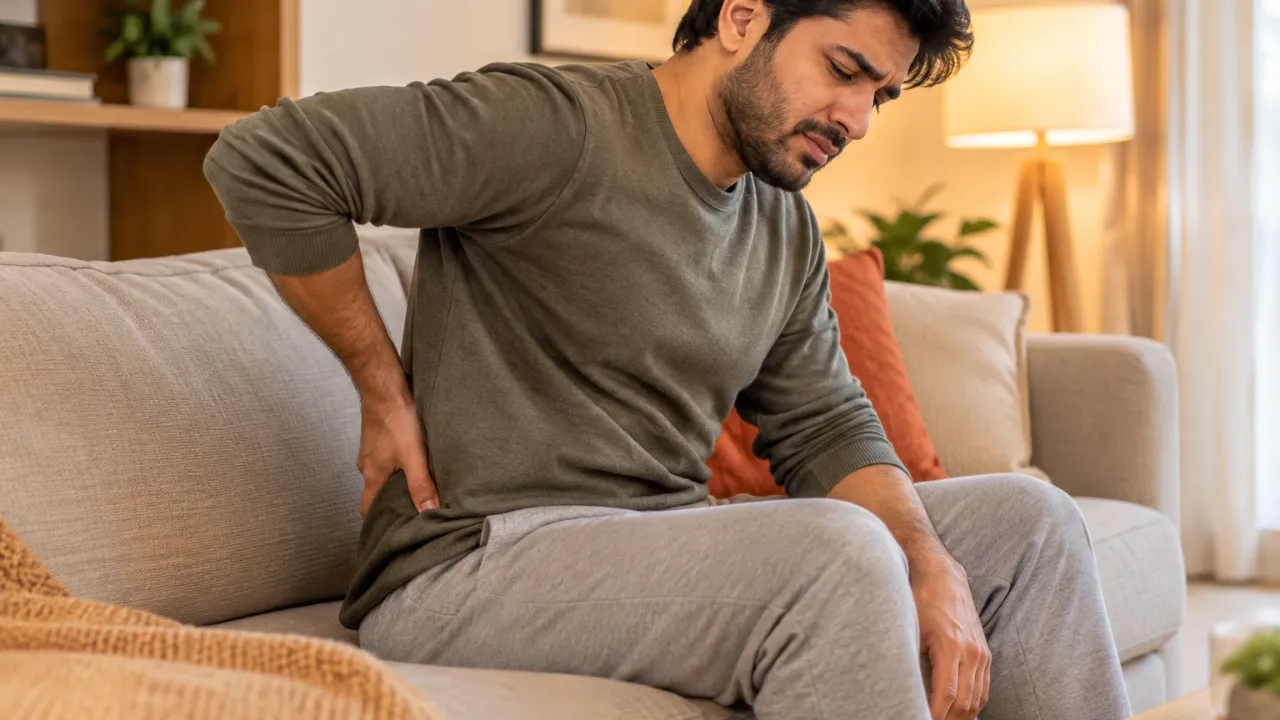
Sciatica pain can make simple usual activities struggling. Be it sitting, standing, walking, or even working for continuous hours can become problematic. The pain usually starts in the lower back and spreads towards the hip, buttock, or even leg. The commonly used treatment is heat therapy, especially when muscles feel tight or stiff. A heating belt offers warmth around the lower back part of the body while you sit or rest at home.
Choosing a heating belt and allowing it to become hot is not enough. Also, coverage, heat settings, timer options, fit, heating speed, as well as safety features matters. Therefore, If you are trying to find the best heating belt for sciatica pain in India, then this guide will help you understand what factors to look for. Additionally, it will explains how PUR-EBLISS heating products can fit into a home heat-therapy routine.
What Is Sciatica Pain?
Sciatica is pain that follows the path of the sciatic nerve. This nerve runs from the lower back through the hips and buttocks and down each leg. Sciatica usually affects one side of the body. The pain may feel sharp, burning, aching, or like an electric shock. Some people may also have numbness or weakness in the affected leg. Other back problems can also irritate or put pressure on the sciatic nerve.
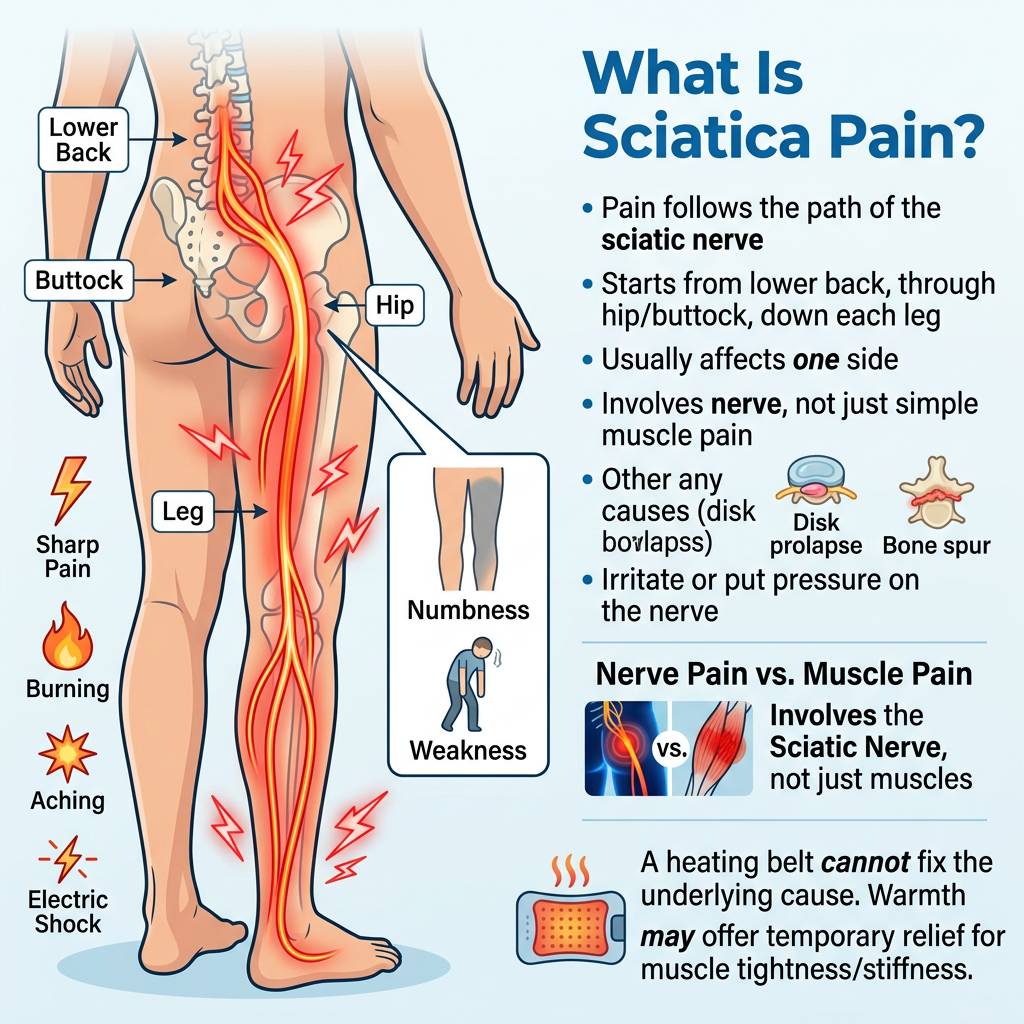
Sciatica is different from simple muscle pain. It involves the sciatic nerve, so the discomfort may go from the lower back into the buttock and leg. A heating belt cannot fix the cause of sciatica. However, warmth may provide temporary comfort when muscle tightness or stiffness is also present.
Can Heat Therapy Help With Sciatica Pain?
Heat therapy may help some people feel more comfortable when they have back or muscle discomfort. Warmth can feel soothing and may help relax tight muscles. A heating belt makes this easier because it keeps the heat close to the lower back. You do not need to hold a hot pack in place throughout the session.
However, heat therapy should be treated as a comfort measure. It should not be considered a cure for sciatica. Different people also respond differently to heat. Some may find it helpful, while others may prefer another form of care. If your pain continues, becomes worse, or affects your normal activities as well, speak with a healthcare expert. Do not rely only on a heating belt when your symptoms need medical supervision.
What to Look for in a Heating Belt for Sciatica?
A good heating belt should be comfortable, easy to use, and suitable for the area you want to warm. Consider the following features before buying one.
- Wide and Comfortable Coverage
The heating area should cover enough of your lower back for your intended use. Wider coverage can be useful when you want warmth across a larger area. The PUR-EBLISS Orthopaedic Heating Belt Large Size measures 19 × 11 inches. Its larger design provides wider coverage around the back.
- Adjustable Heat Levels
Everyone has a different heat preference. A setting that feels comfortable for one person may feel too warm for another. Multiple heat levels let you choose the warmth that feels right for you. The PUR-EBLISS Orthopaedic Heating Belt offers 9 adjustable heat levels. This gives users more control during each heating session.
- Timer Settings
A timer helps you control how long the heating session lasts. It can be useful when you want a set heating period without checking the clock again and again. The PUR-EBLISS Orthopaedic Heating Belt provides 4 timer settings. This gives users more flexibility when planning their heating routine.
- Secure and Comfortable Fit
A heating belt should stay in the right position during use. An adjustable strap can help you secure the belt around the area you want to warm. The belt should feel secure without being too tight. Comfort is important, especially if you plan to use the product while sitting or resting.
- Rapid Heating
A heating belt that warms up quickly can be convenient. You do not have to wait for a long time before feeling warmth. Rapid heating can be useful during busy mornings, after work, or when you want a short comfort session.
- Safety Features
Safety is important when using any electrical heating product. Features such as automatic shut-off and overheat protection can provide extra safety. Still, these features do not replace careful use. Always follow the instructions supplied with the product. Never use an electrical heating product in a way that goes against its instructions.
PUR-EBLISS Orthopaedic Heating Belt for Back Comfort
The PUR-EBLISS Orthopaedic Heating Belt Large Size is designed to provide warmth across a wider area of the back. The belt measures 19 × 11 inches. This larger size can be useful for people who prefer broader coverage around the lower back. It provides 9 adjustable heat levels. You can choose a heat level that feels comfortable for your needs. The belt also provides 4 timer settings. These settings let you control the length of your heating session. The product uses rapid heating technology. It also provides a moist heat therapy option for users who prefer this type of warmth.
An adjustable strap helps keep the belt in place. This can be convenient compared with holding a heating pad against your back. The belt also includes automatic shut-off and overheat protection. These features provide an additional safety measure during use. The heating belt comes with a 3-year warranty on the belt. The controller is not covered by the warranty. For someone looking for a heating belt with wide coverage, adjustable heat, timer controls, and safety features, the PUR-EBLISS model is an option worth considering.
Other PUR-EBLISS Heating Options
A heating belt may not be the right choice for everyone. Some people may prefer a smaller belt or a heating pad.
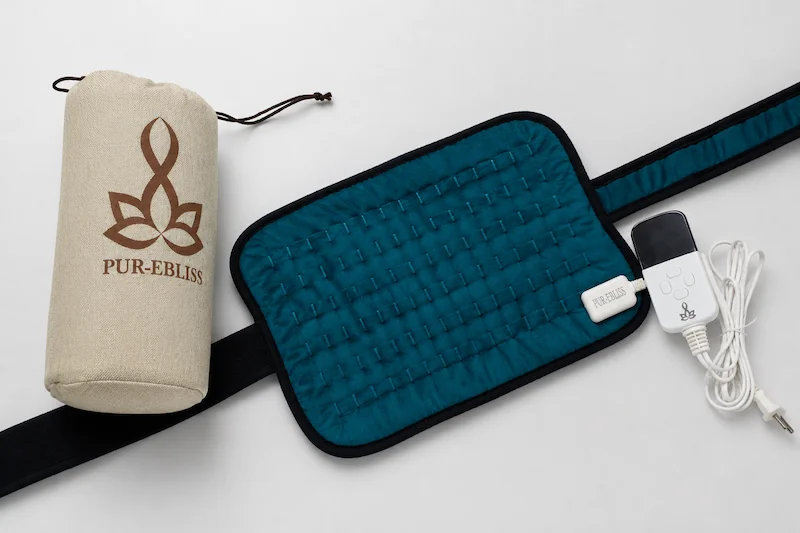
PUR-EBLISS Small Electric Heating Belt
The PUR-EBLISS Small Electric Heating Belt is a more compact option. It measures 13.5 × 9.5 inches and is designed for more focused warmth. The product provides 9 heat levels. Its smaller size can be useful for people who do not need the wider coverage of a large heating belt. This can be a practical choice when you prefer a smaller product for targeted heat therapy.
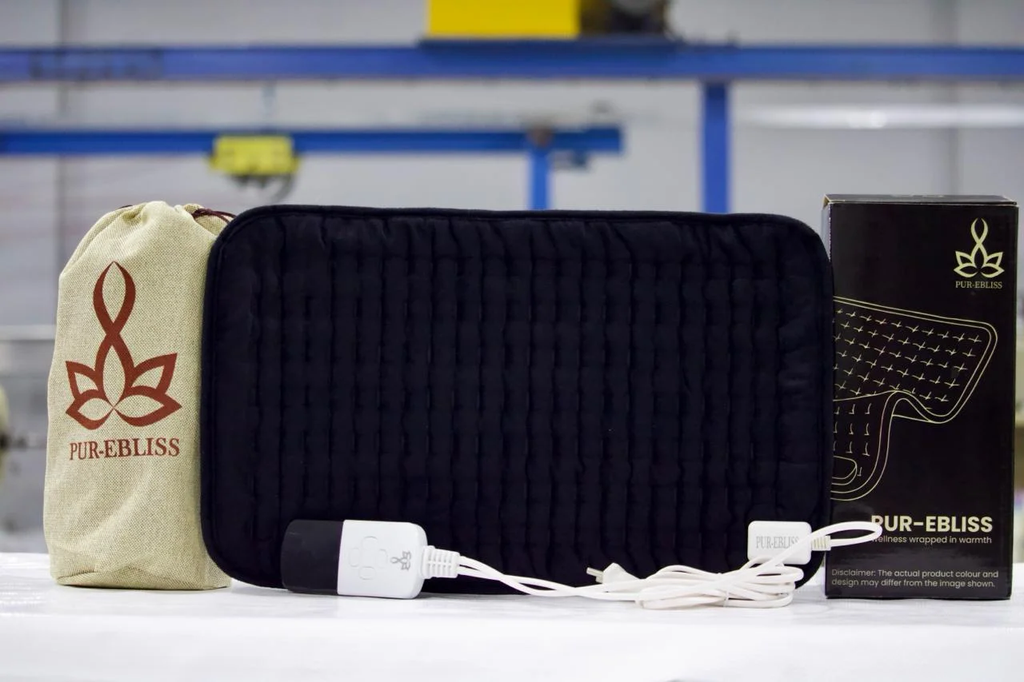
PUR-EBLISS Orthopaedic Heating Pad
The PUR-EBLISS Orthopaedic Heating Pad is another option for people who prefer a pad instead of a belt. It measures 19 × 11 inches and provides 9 heat levels and 4 timer settings. It also offers rapid heating and a moist heat therapy option.
The pad can be placed over the area where you want warmth. This can be useful for people who mainly use heat therapy while sitting or resting. The choice between a belt and a pad depends on your preferred style of use. A belt may be more convenient when you want the product to stay secured around your body. A pad may be more suitable when you prefer flexible positioning.
How to Use a Heating Belt for Sciatica?
Using a heating belt correctly is important. Always read the instructions supplied with your product before using it.
- Position the Belt Correctly
Place the belt around the area where you want warmth. Make sure it feels comfortable and is not too tight. The heating area should sit properly against the intended part of your back.
- Choose a Comfortable Heat Level
Start with a comfortable heat setting. You do not need to use the highest setting to get warmth. If needed, adjust the heat slowly. Slow down the setting if the heat becomes uncomfortable.
- Set the Timer
Choose a timer setting according to the product instructions. A timer can help you keep the heating session within the recommended period. Avoid using the belt for longer than instructed.
- Check Your Skin and Comfort
Pay attention to how your skin feels during the session. Stop using the belt if you notice burning, irritation, or unusual discomfort. People with skin sensitivity should take extra care because they may not notice excessive heat quickly.
- Finish the Session Safely
Turn the product off after the session. Follow the manufacturer’s instructions for disconnecting and storing it. Keep the controller and electrical parts away from water and moisture.
When Should You Avoid Using a Heating Belt?
Heat therapy is not suitable for every situation. Do not use a heating belt over broken, irritated, or damaged skin. You should also take extra care if you have reduced skin sensitivity. People with certain medical conditions should speak with a healthcare professional before using heat therapy.
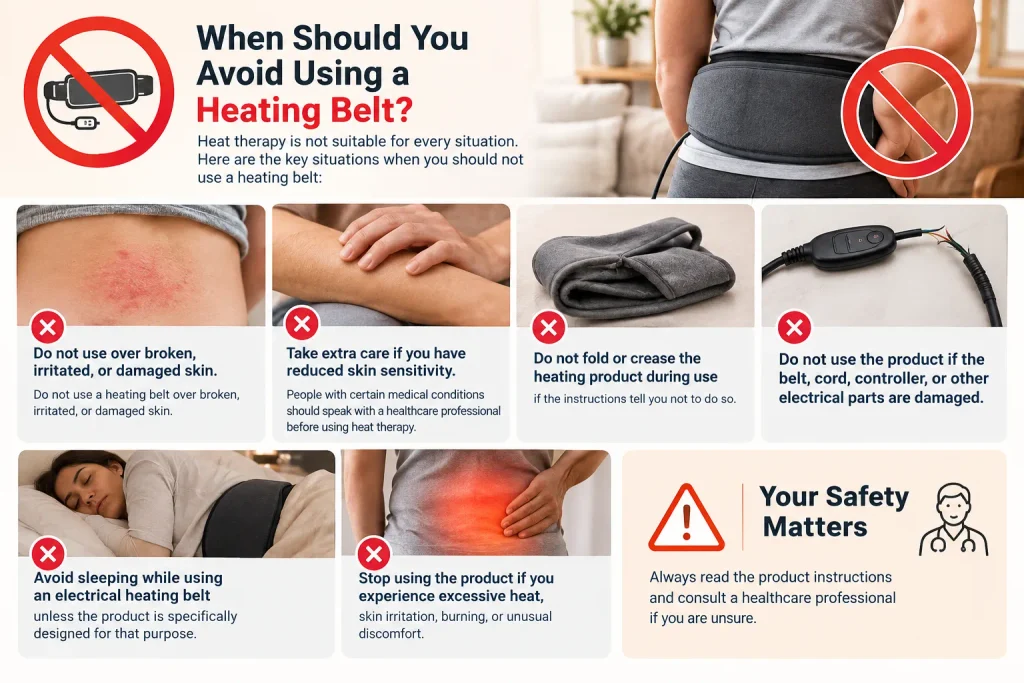
Do not fold or crease the heating product during use if the instructions tell you not to do so. Do not use the product if the belt, cord, controller, or other electrical parts are damaged. Avoid sleeping while using an electrical heating belt unless the product is specifically designed for that purpose. Stop using the product if you experience excessive heat, skin irritation, burning, or unusual discomfort.
When Should You See a Doctor for Sciatica?
A heating belt can provide comfort, but it cannot identify or treat the cause of sciatica. You should speak with a healthcare professional if your pain continues, gets worse, or affects your daily activities. You should also seek medical advice if you have repeated episodes of sciatica or symptoms that do not improve with basic self-care.
Some symptoms need urgent medical attention. Go for the emergency help if you develop severe or worsening weakness or numbness in both legs. You should also seek urgent help if you have numbness around the genitals or anus or new problems controlling your bladder or bowel. These symptoms can point to a serious problem involving the nerves. A heating belt should never be used as a replacement for urgent medical care.
How Can You Support Your Back Alongside Heat Therapy?
Heat therapy can be one part of a wider approach to back comfort. Try to keep moving when your symptoms allow it. Gentle movement may be better than staying in bed or sitting in one position for a long time. If you work at a desk, take regular movement breaks. Change your sitting position and avoid staying in the same posture for several hours.
Gentle exercises may also help some people with sciatica. However, the right exercises depend on your symptoms and condition. If you are unsure, ask a healthcare professional or physiotherapist for advice. Good sitting and standing habits can also support your back. Use safe lifting methods when moving heavy objects. The aim is to use heat therapy as one part of your routine rather than depending on it as the only solution.
Choosing the Right Heating Belt for Your Needs
The best heating belt for you depends on your needs and how you plan to use it. Start by considering the area you want to cover. If you want wider coverage around the back, a larger belt may be more suitable. If you want a smaller heating area, a compact belt may be easier to use. Next, consider the heat controls. Multiple heat levels give you more choice. Timer settings can make sessions easier to manage. Comfort is also important. An adjustable strap can help keep a belt in place without making it feel too tight. Safety features should also be part of your decision. Automatic shut-off and overheat protection can provide added peace of mind.
The PUR-EBLISS Orthopaedic Heating Belt Large Size combines these useful features. It offers 19 × 11-inch coverage, 9 heat levels, 4 timer settings, rapid heating, a moist heat therapy option, an adjustable strap, automatic shut-off, and overheat protection. This makes it an option for people looking for convenient heat therapy for the back at home. However, your choice should always depend on your personal comfort, intended use, and the product instructions.
Final Thoughts
Finding the best heating belt for sciatica pain in India is not only about choosing the hottest product. Coverage, comfort, heat control, timer settings, heating speed, fit, and safety features all matter. The PUR-EBLISS Orthopaedic Heating Belt Large Size offers wider coverage and several adjustable features. It provides 9 heat levels, 4 timer settings, rapid heating, a moist heat therapy option, an adjustable strap, automatic shut-off, and overheat protection.
These features make it a practical option for people who want convenient heat therapy at home. However, a heating belt is a comfort product. It should not be treated as a cure for sciatica. If your symptoms continue, become worse, or include serious warning signs, speak with a qualified healthcare professional. Use heat therapy safely and follow the instructions provided with your heating product.