
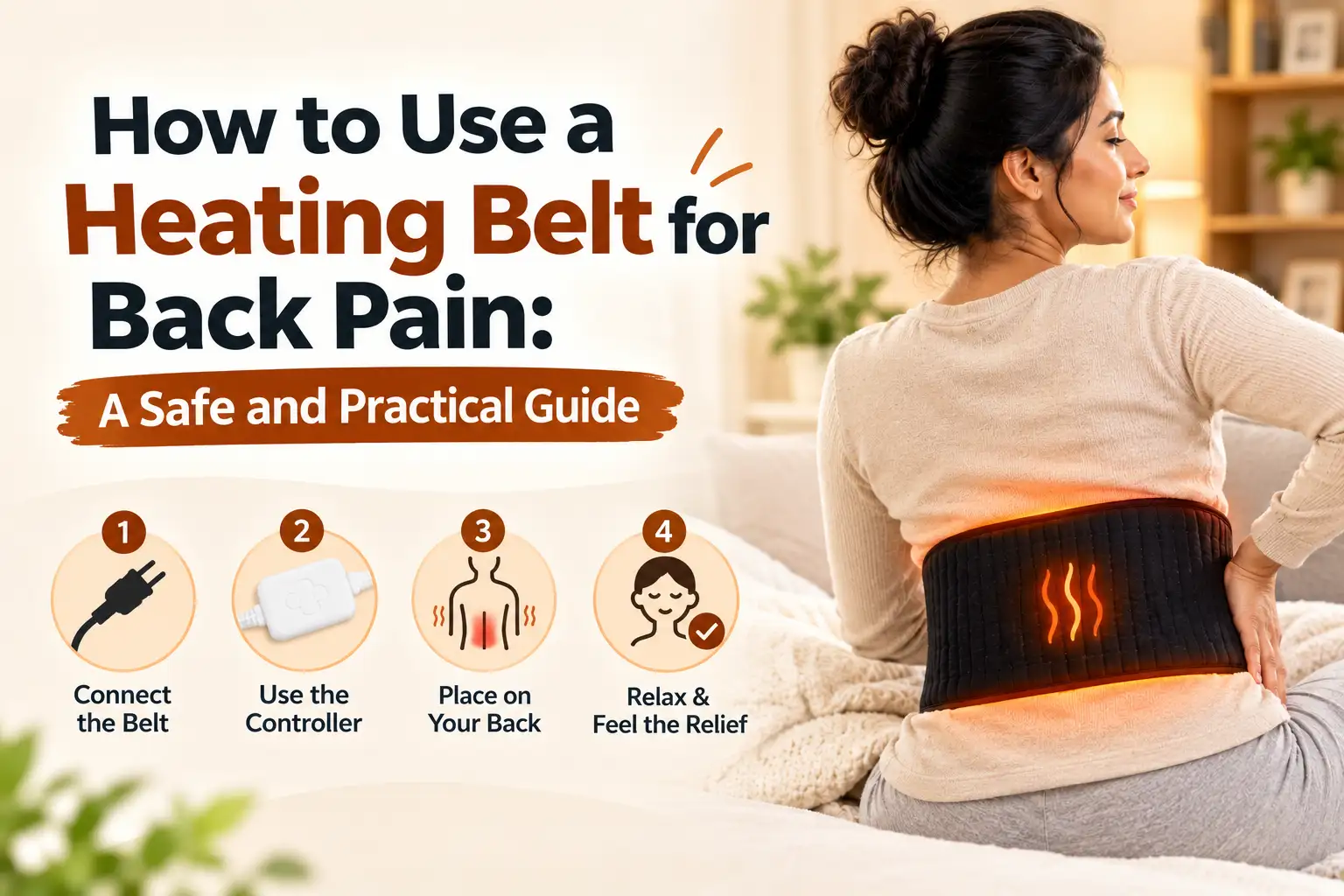
Back pain can make everyday activities, including sitting, walking, working, exercising, or even sleeping, very uncomfortable. For people, the gentle heat can be a useful self-care treatment because it helps relax tensed muscles and provide temporary relief from stiffness as well as discomfort. NHS guidance also lists heat packs among measures that may assist in relieving the joint stiffness or muscle spasms related to back pain.
A heating belt can make heat therapy easy because it is built in such a manner to set around the back and provide controlled warmth while letting you remain relatively comfortable. But knowing how to use a heating belt for back pain and that too correctly is important as well. Excess heat, long exposure, direct touch with sensitive skin, or using heat when medical assessment is required can cause trouble.
Therefore, this guide elaborates how to use a heating belt safely, how long to use it, where to position it, and what are the important precautions, and when back pain requires professional medical attention.
Can a Heating Belt Help With Back Pain?

Heat therapy is used as a supportive treatment for back discomfort. Little warmth may help in relaxing the tight muscles as well as provide temporary relief from the pain, stiffness, along with the general discomfort.
It is important to understand that a heating belt can never address each and every cause of back pain. Discomfort could be the result of muscle strain, sciatica, disc-related problems, arthritis, injuries, or other underlying medical conditions.
So that’s why a heating belt should always be viewed as a comfort and self-care option rather than a complete treatment. In case your pain is severe, continues to worsen, does not improve, or occurs with unusual symptoms, then do not depend on heat therapy only. Consult with your healthcare professional for apt advice.
How to Use a Heating Belt for Back Pain
1. Choose a Comfortable Position
Before turning on the heating belt, sit, stand, or lie in a position that allows your back to remain relaxed. Avoid postures that put additional pressure on the painful area. If you are sitting during the session, maintain a comfortable posture and avoid staying completely still for extended periods. If you are lying down, ensure the heating belt is not trapped beneath your body. The aim is to combine gentle warmth with a comfortable position without placing additional strain on your back.
2. Position the Belt Correctly
Place the heating belt over the area where you feel muscular discomfort or stiffness. For lower-back discomfort, position the belt around the lower back so that the heating section covers the affected area.
The belt should feel secure but should not be excessively tight. Too much pressure may create unnecessary discomfort. If your heating belt includes an adjustable strap, secure it according to the manufacturer’s instructions. You should be able to breathe, sit, and move comfortably while wearing the belt.
3. Check Your Skin Before Applying Heat
Inspect the skin before starting your heating session. Make sure the area does not have significant irritation, wounds, swelling, or other visible damage. It is equally important to have normal temperature sensation in the area. Reduced sensitivity may make it difficult to notice when the heat becomes too intense. People with diabetes, poor circulation, nerve-related conditions, or reduced skin sensitivity should consult a healthcare professional before using heat therapy.
4. Start With a Comfortable Heat Level
Turn on the heating belt and begin with a comfortable temperature instead of immediately choosing the highest setting. Heat therapy should provide soothing warmth rather than intense or burning heat. If your belt has multiple temperature levels, increase or decrease the setting gradually based on your comfort and the product instructions. If the skin feels excessively hot, painful, irritated, or uncomfortable, turn the heating belt off immediately.
5. Set the Timer
If your heating belt includes timer settings, choose an appropriate duration before starting the session. Healthcare guidance commonly recommends relatively short applications of heat. Depending on the circumstances, recommendations may range from approximately 10 to 20 minutes at a time. Always follow the instructions provided with your specific heating belt. A longer session does not necessarily mean better results. Extended exposure can increase the risk of skin irritation or burns.
6. Relax During the Session
Once the belt is correctly positioned and the temperature feels comfortable, allow your back muscles to relax.
You can include heat therapy as part of a wider self-care routine. However, avoid strenuous activity while wearing the belt, especially if movement increases your discomfort. Heat should help you feel more comfortable. It should not be used as a way to push through severe, unexplained, or worsening pain.
7. Switch Off After Use
Turn off the heating belt once the selected timer ends or your recommended session is complete. Remove the belt carefully and then check the skin immediately to ensure well-being. Some warmth remains temporarily, but excessive redness, burning, irritation, or discomfort are indications showing that you should stop using the product immediately. Never ever leave an electric heating belt operating unattended. Also, do not sleep while wearing the belt until and unless the manufacturer specifically says that the product is designed and approved for safe overnight use.
How Long Should You Use a Heating Belt for Back Pain?
The perfect duration depends on the heating belt, temperature setting, type of discomfort, and individual circumstances. Several NHS sources prescribes it for short heat applications, for around 10 to 15 minutes, while some guidance says approximately 15 to 20 minutes. For an electric heating belt, priority should always be given to the manufacturer’s instructions. If you are new to heat therapy, then start with a shorter session and that too at a comfortable temperature. Also keep in mind that do not keep increasing the temperature or extend the session simply because your back pain has not decreased. If you depend regularly on heat therapy to manage your symptoms, then consider discussing the issue with a healthcare expert.
Where Should You Place a Heating Belt?
The correct placing depends on the spot of your discomfort and also the design of the heating belt. For example, for lower-back discomfort, position of the belt should be such that, so that its heating section can cover the affected muscular area. It should fit comfortably without exerting excessive pressure.
Always avoid placing the heat over a broken, irritated, numb, or damaged skin. Avoid positioning of heating element under your body because pressure combined with prolonged heat supply can increase the risk of skin injury. If your back pain slips into your leg or occurs with numbness, tingling, or weakness, then do not assume that heat therapy is enough. These symptoms can occur with conditions such as sciatica and may require proper medical assessment.
Important Safety Precautions
Avoid Excessive Heat
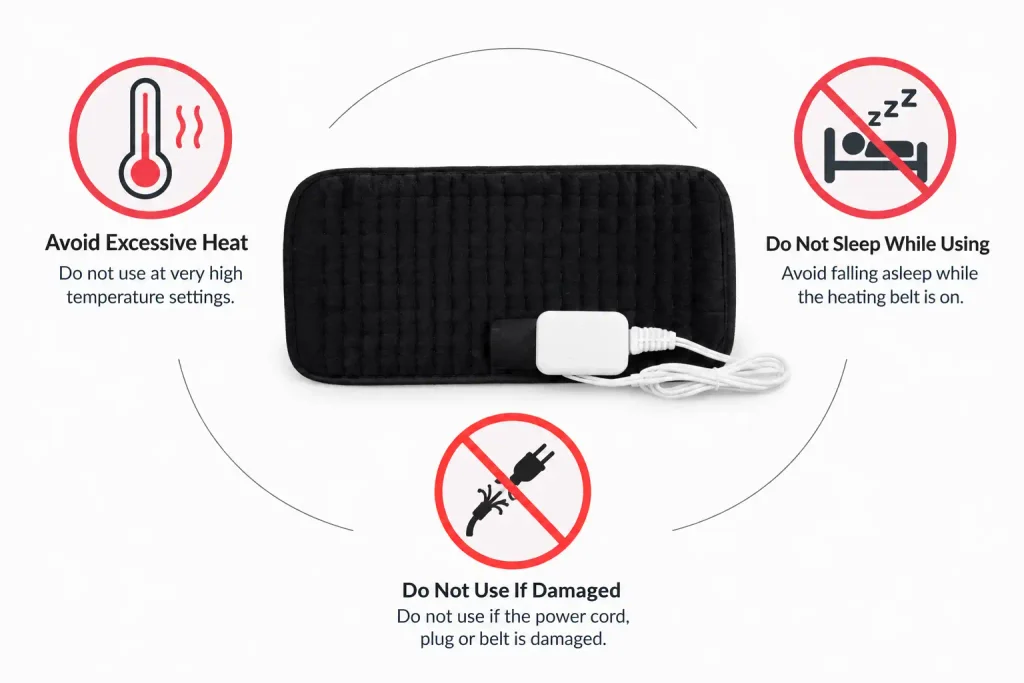
A higher temperature does not necessarily mean better relief. Choose a comfortable heat level and stop using the belt immediately if the warmth becomes painful or excessively hot.
Do Not Sleep With the Heating Belt
Sleeping while using an electric heating belt can expose the skin to heat for a prolonged period without you noticing excessive warmth. Unless the manufacturer specifically approves overnight use, switch the product off before sleeping.
Protect Sensitive or Damaged Skin
Do not apply heat to areas with reduced sensation, wounds, or significant skin irritation without appropriate medical advice. Children, older adults, and people with limited physical or sensory abilities may need supervision while using heat therapy.
Keep Electrical Components Dry
Follow the manufacturer’s cleaning and maintenance instructions carefully. Keep the controller, plug, cord, and other electrical components away from water and moisture. Do not use the heating belt if the cord, controller, heating element, or other electrical components appear damaged.
Follow the Product Instructions
Every heating belt may have different temperature ranges, timer options, materials, cleaning requirements, and safety features. Read the instructions before using the product for the first time and follow them during every session.
When Should You Avoid Using a Heating Belt?
Heat therapy may not be suitable for every type of back problem. If your pain began after a significant injury, is accompanied by substantial swelling, or occurs with symptoms that concern you, seek medical advice instead of relying solely on a heating belt.
People with conditions that affect circulation or sensation should speak with a healthcare professional before using heat therapy. This is particularly important if you may not reliably notice when the heat becomes too intense. A heating belt should also not replace professional diagnosis or treatment when back pain is persistent, unexplained, or keeps returning.
What Can You Do Alongside Heat Therapy?
Heat therapy can form one part of a broader approach to managing uncomplicated back discomfort. Staying reasonably active is generally encouraged because spending long periods in bed may contribute to stiffness and reduced function. NHS guidance recommends continuing normal activities where possible and avoiding prolonged bed rest. Gentle walking and suitable exercises may help maintain movement. Changing positions regularly can also be beneficial, especially if you spend many hours sitting.
Depending on the cause of your symptoms, a doctor, physiotherapist, or another healthcare professional may recommend specific exercises, stretches, or additional treatments. Heat can make movement more comfortable, but it should not be used to ignore worsening symptoms or continue activities that significantly increase your pain.
When to Seek Medical Help for Back Pain
Most uncomplicated cases of back pain improve with time, but some symptoms require prompt medical attention.
Seek urgent medical help if your back pain occurs with:
- Numbness around the genitals, anus, or buttocks
- Loss of bladder or bowel control
- Significant weakness or numbness affecting both legs
- Rapidly worsening symptoms
- Severe pain following a serious accident
You should also seek medical advice if the pain occurs with fever or a general feeling of being unwell, becomes severe and worsens quickly, or fails to improve with appropriate self-care. If back pain affects your everyday activities or keeps returning, professional assessment can help identify the possible cause and determine a suitable treatment plan.
Final Thoughts
Knowing how to use a heating belt for back pain can make heat therapy safer and more comfortable. Position the belt correctly, begin with gentle warmth, use the recommended timer, monitor your skin, and always follow the manufacturer’s instructions. Avoid excessive heat and never sleep while using an electric heating belt unless the product is specifically designed and approved for safe overnight use. Most importantly, remember that a heating belt is a supportive comfort measure, not a cure for every type of back pain. Combining sensible heat use with appropriate movement and seeking professional advice when necessary can provide a more responsible approach to managing back discomfort.